Drive guide
I-90 — Seattle to Snoqualmie Pass
70 things worth knowing along this corridor, in the order you meet them driving. Every one is sourced.
Sal reads these as you pass them, and answers when you ask.
Start a withby driveSal’s stories on I-90

Along the way
quirkI-90 western terminus
Interstate 90 is the longest Interstate Highway in the United States at about 3,100 miles; its western terminus is at SR 519 near Seattle's stadiums and its eastern end is in Boston.
Source: en.wikipedia.org
institutionUwajimaya
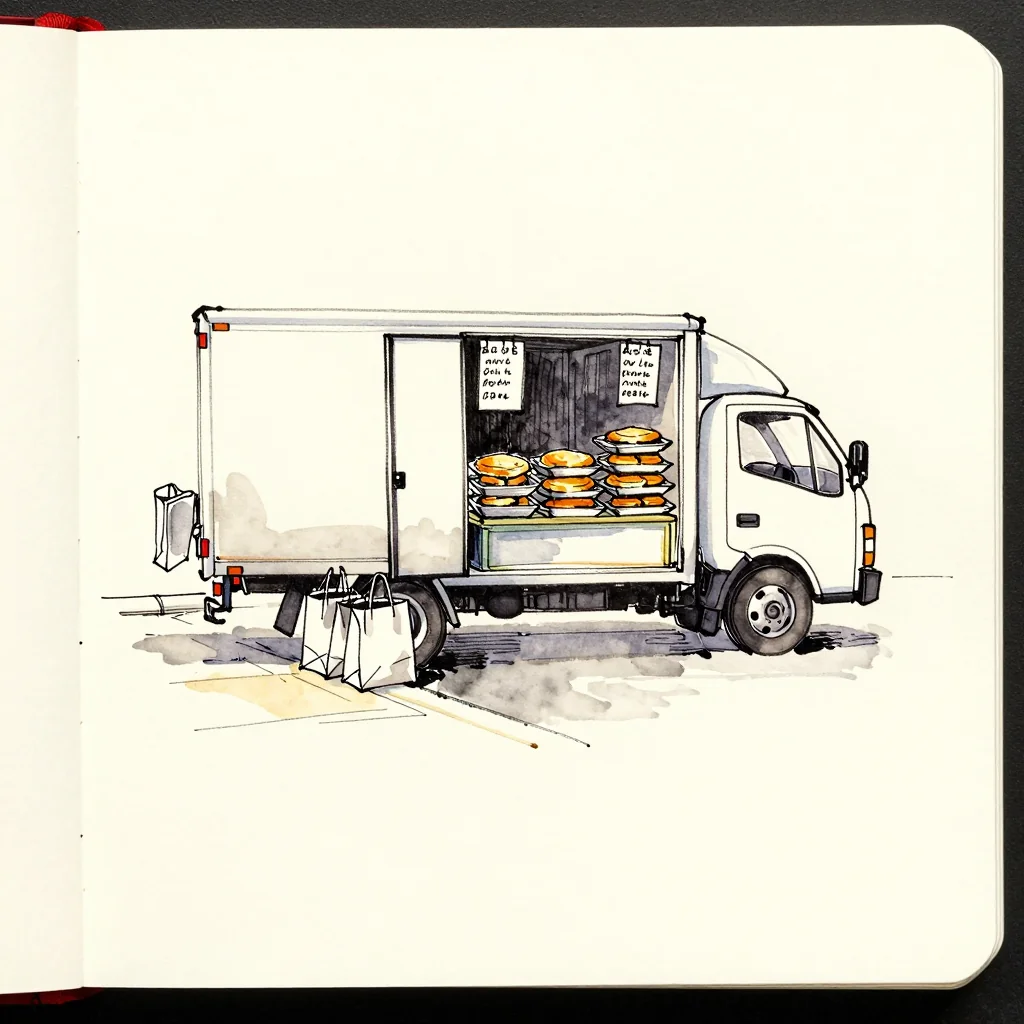
Uwajimaya was founded in Tacoma in 1928 by Fujimatsu and Sadako Moriguchi; Fujimatsu sold homemade fishcakes and other Japanese staples from the back of his truck. Its Seattle flagship anchors Uwajimaya Village in the heart of the Chinatown-International District, and the family-owned business is now led by granddaughter Denise Moriguchi, the third generation.
Source: uwajimaya.com
developmentJudkins Park Station and the Crosslake Connection
Sound Transit's 2 Line opened across Lake Washington on March 28, 2026, with new stations at Judkins Park and Mercer Island. It was the first time anywhere in the world that a metro line carried commuters across a floating bridge.
Source: soundtransit.org
quirkMount Baker Ridge Tunnel
The Mount Baker Ridge Tunnel's 1989 bore, 63 feet in diameter and dug through clay, is the world's largest-diameter soft-earth tunnel; it carries I-90 and the 2 Line under the Mount Baker neighborhood.
Source: en.wikipedia.org
quirkThe Bridge That Sank
On November 25, 1990, the Lacey V. Murrow Bridge, mid-renovation, flooded through pontoon hatchways left open during a week of wind and rain, broke apart and sank to the bottom of Lake Washington.
Source: historylink.org
seasonalSeafair on Lake Washington
Seafair Weekend brings hydroplane races to Lake Washington the first weekend of August, and the Navy's Blue Angels have performed in Seattle since 1966.
Source: mynorthwest.com
historyLacey V. Murrow Floating Bridge
The Lake Washington Floating Bridge, dedicated July 2, 1940 and later renamed the Lacey V. Murrow Memorial Bridge, was the world's first reinforced-concrete floating bridge and the largest floating structure ever built at the time.
Source: historylink.org
sightMid-lake view
Lake Washington is about 150 to 200 feet deep at the bridge site, with another 100 feet of soft clay and mud below, which makes deep foundation pilings impractical; that is why engineer Homer Hadley formally proposed a floating concrete pontoon bridge on October 1, 1921.
Source: historylink.org
quirkAubrey Davis Park lid
Aubrey Davis Park sits on the lid over I-90 across Mercer Island, built after islanders led by mayor Aubrey Davis ('We don't want to see it, hear it, or smell it') negotiated the 1976 I-90 agreement.
Source: mi-reporter.com
institutionRoanoke Inn
The Roanoke Inn, built in 1914, is the oldest business on Mercer Island. The Reeck family bought it in 1941.
Source: theroanokeinn.com
institutionChace's Pancake Corral
Chace's Pancake Corral at 1606 Bellevue Way SE has been family-run since 1958, keeping its Western theme and Bill Chace's original recipes.
Source: seattletimes.com
seasonalMercer Slough Blueberry Farm
The Mercer Slough Blueberry Farm, at 2220 Bellevue Way SE, was first set up in the 1940s and is run by Bellevue Parks & Community Services. It offers seasonal U-pick blueberries, usually from mid-July to early September.
Source: bellevuewa.gov
sightMercer Slough
Mercer Slough begins just west of Interstate 405 and empties into Lake Washington's East Channel at Interstate 90. It is the centerpiece of the largest wetland next to Lake Washington, at 367 acres.
Source: en.wikipedia.org
quirkFactoria
A stove factory was built at the townsite platted by E. L. Skeel's Mercer Land Company in 1908 but never manufactured a single stove; in 1911 the stalled project was re-platted as Factoria, a name meant to attract major industries. Promoters pitched coal smoke 'belching from hundreds of smokestacks' and expected at least 20 plants, but the industry never came.
Source: en.wikipedia.org
developmentT-Mobile headquarters
T-Mobile's renovated headquarters campus in Bellevue encompasses over one million square feet of workspace.
Source: gensler.com
institutionBellevue College
Bellevue College opened January 3, 1966 with classes at Newport High School and is now the largest of the 34 institutions in Washington's community and technical college system.
Source: en.wikipedia.org
seasonalEbright Creek kokanee
Lake Sammamish kokanee return in late autumn to spawn in the streams where they were born; after Sammamish replaced culverts where Ebright and Zackuse creeks cross East Lake Sammamish Parkway, official counts reported in February 2025 topped 8,000 fish, the highest in almost 10 years, and residents volunteer in the fish counts.
Source: sammamish.us
sightLake Sammamish State Park
Lake Sammamish State Park at the lake's south end covers 531 acres with 6,858 feet of waterfront and is a popular family destination minutes from Seattle.
Source: explorewashingtonstate.com
developmentCostco headquarters
Costco's headquarters, which supports its operations around the world, is on Lake Drive in Issaquah, with a 9-story, 624,788-square-foot steel and glass addition beside I-90. A 2014 agreement with the city approved 1.5 million square feet of new office space, leaving room for more growth.
Source: 425business.com
historySquak, Gilman, Issaquah
The settlement was first called Squak, renamed Gilman after railroad promoter Daniel Gilman, and renamed Issaquah by the state legislature in 1899 — closer to the original Native name Is-qu-ah.
Source: historylink.org
institutionIssaquah Salmon Hatchery
The Issaquah Salmon Hatchery on Issaquah Creek was built in 1936 as a Works Progress Administration project; still run by WDFW, it raises roughly 3.5 million chinook and a million coho.
Source: issaquahfish.org
institutionIssaquah Library
The Issaquah Library traces its beginnings to February 1908, when a reading room opened in the back of Enos Guss's barbershop on Front Street. In 2001, KCLS opened the current Issaquah Library in a pleasant, roomy new building at 10 W Sunset in Issaquah.
Source: historylink.org
seasonalSalmon Days
Issaquah Salmon Days is held the first Saturday and Sunday in October and has run every year since 1970. It averaged around 150,000-200,000 visitors through the 1990s and 2000s. At the Issaquah Salmon Hatchery, visitors can see chinook and coho that have returned to spawn.
Source: en.wikipedia.org
historyBank of Issaquah building
This distinctive building was built in 1910 to serve as the Bank of Issaquah, and at the time it was one of the most sophisticated and ornate buildings in town. The structure was dramatically remodeled in 1949 and lost most of its grandeur in the process.
Source: historylink.tours
institutionVillage Theatre
Village Theatre staged its first musical in Issaquah in 1979 and grew into a premier musical-theatre company whose Front Street productions have gone on to Broadway.
Source: visitissaquahwa.com
historyIndependent Order of Odd Fellows Hall
The Independent Order of Oddfellows (IOOF) Hall was built in 1888. It is said to be the oldest commercial structure remaining in Issaquah.
Source: historylink.tours
institutionIssaquah Creamery (Darigold plant)
A group of local businessmen opened the Northwestern Milk Condensing Company at this site in 1909 to serve local dairy farms, and there’s been a dairy plant here ever since. In its early years the plant condensed milk, made butter and ice, and canned fruits and vegetables.
Source: historylink.tours
historyHailstone Feed Store
Frank Hailstone and his sister, Nell Hailstone Falkenstein, bought the building in 1941. After a remodel, it opened in 1942 as the Hailstone Feed Store and Shell Gasoline Station.
Source: historylink.tours
historyFront Street and Sunset Way homestead claims
Lyman Andrews filed first, soon after he discovered coal in the nearby mountains in 1862. Two Norwegian brothers, Lars and Ingebright Wold, filed adjoining claims in 1867, while Jacob Jones filed another adjoining claim the same year. The two Wold brothers and Jones — all bachelors at the time — simply built one cabin at the common corner where their plats merged, rather than three separate cabins.
Source: historylink.tours
sightIssaquah Alps
Nature writer Harvey Manning coined 'Issaquah Alps' in 1977 for the hills around Issaquah, including Cougar, Squak, and Tiger mountains, elevating them from foothills to 'Alps' to push for their preservation.
Source: en.wikipedia.org
historyGrand Central Hotel
When the Grand Central Hotel was constructed, Issaquah was a stopover point for passengers traveling by train from Seattle to Snoqualmie. James Henry Croston, Sr., who worked in the mines as a carpenter, built the boarding house and operated the hotel until his death in 1913.
Source: issaquahhistorymuseums.com
quirkIssaquah Valley Trolley
The Issaquah Valley Trolley (IVT) is a heritage streetcar line in Issaquah, Washington, United States. It is a project of the Issaquah History Museums (formerly known as the Issaquah Historical Society).
Source: en.wikipedia.org
historyIssaquah Depot
Issaquah's Seattle Lake Shore & Eastern Railroad depot was completed in 1889 and made it possible for local coal to be taken to market in Seattle; the depot is now a museum on the National Register of Historic Places.
Source: revisitwa.org
historyTriple XXX Rootbeer site
The Triple XXX Rootbeer Drive-In ran at this Gilman Boulevard site from 1968 until it closed for good on November 29, 2023. At closing, it and a Triple XXX in Lafayette, Indiana were the only 2 locations left of a chain that had spread across the country.
Source: seattletimes.com
historyIssaquah logging history display
The engine on display was built between 1895 and 1910 by Puget Sound Iron and Steel Works near Tacoma. It was found in 1987 near Enumclaw on land owned by the Weyerhaeuser Company, and moving it to Issaquah proved to be no easy task.
Source: historylink.tours
historyGilman Town Hall and Jail
In 1898 the Town of Gilman (later Issaquah) bought the building for use as a town hall. Just behind the town hall building is a two-cell jail which served as the town jail from 1914 until 1930, and still retains its original iron bars in the windows.
Source: historylink.tours
institutionBoehm's Candies
Vienna-born chocolatier Julius Boehm moved his candy company to Issaquah in 1956 because the foothills reminded him of his homeland, building the 'Edelweiss Chalet,' called the first Alpine chalet in the Northwest; the shop still operates there.
Source: boehmscandies.com
quirkPoo Poo Point
Poo Poo Point on Tiger Mountain, where paragliders launch off the steep northwestern face, takes its folksy name from the steam whistle sounds heard across the Tigers in the early days of logging.
Source: wta.org
developmentIssaquah Highlands
Issaquah Highlands opened in 1998 on Grand Ridge, at the site of the Grand Ridge coal mine, which ran from 1909 to 1934. Of the development's 2,200 acres, 1,520 are kept as public open space in what was a heavily forested area. Swedish opened an 80-bed hospital there in 2011.
Source: en.wikipedia.org
historyHigh Point and the Sunset Highway
I-90 follows the Sunset Highway, dedicated at Snoqualmie Pass on July 1, 1915 as the first automobile route over the Cascades, which largely followed an earlier wagon road.
Source: historylink.org
historyPreston-Snoqualmie Trail
The Preston-Snoqualmie Trail is a paved route through steep terrain within the Mountains to Sound Greenway. Past Preston-Fall City Road it uses a series of steep, tight switchbacks that replaced the old trestle that carried railcars full of timber over the Raging River.
Source: kingcounty.gov
developmentTalking Rain
Talking Rain was founded in 1987 in Bellevue and moved to its location in Preston in 1992, the same year it began production of Sparkling Ice. Sparkling Ice accounts for the majority of its business.
Source: en.wikipedia.org
developmentPreston Athletic Fields
A 1997 collaboration of King County, the State Department of Natural Resources, the Preston community and the Greenway Trust set the vision for the Preston park complex, and the Preston Athletic Fields were developed in partnership with Eastside Football Club. In 2021 the fields became part of the Jim Ellis Memorial Regional Park at Preston.
Source: mtsgreenway.org
historyAugust Lovegren House
August Lovegren, who developed the Preston Mill and encouraged extensive Swedish settlement in the Preston area, built the two-story house in 1904. After falling into disrepair, it was extensively restored in the early 1990s.
Source: historylink.org
historyPreston Community Center
The Preston Community Center was built in 1938 as part of the Works Progress Administration, a river-rock faced log building. In 2008 it was added to Washington State's Heritage Register.
Source: kingcounty.gov
historyPreston Mill Kiln Building
The Kiln Building, a remnant of the defunct Preston Mill Company, has been named a King County Landmark, skirting fears of demolition of the early 20th century building. The 4,700-square-foot, concrete Kiln building is at the lower end of what is now Preston Mill Park. Built in roughly 1910, the structure was used to dry larger logs before they could be processed.
Source: valleyrecord.com
historyPreston
The Preston Mill Company, founded by Swedish-American immigrants August and Emil Lovegren, drew a workforce mostly of Swedish descent and operated from 1896 to 1990 with two mills on the Raging River, a shingle mill and a lumber mill upstream; by 1929 it employed roughly 200 men.
Source: valleyrecord.com
institutionPreston Baptist Church
In 2008 the Preston Baptist Church celebrated 100 years of fellowship. Over 200 people joined in, with speeches, a sharing of photos and artifacts of the early years, and a feast at Vassa Hall.
Source: valleyrecord.com
quirkPreston Dip
On July 11, Washington State Patrol troopers on the ground in marked and unmarked patrol cars teamed up with a state patrol aviation unit for a speed emphasis at the Preston “Dip” on Interstate 90 at mile post 23. A wide section of smooth highway in a straight, downhill stretch often entices would-be speeders to put pedal to metal, making the dip the fastest stretch of highway in Washington. The two-hour emphasis stopped 28 speeders. The average speed of those stopped was 90.5 mph in a 70 mph zone.
Source: valleyrecord.com
historyVasa Hall
Vasa Hall in the old Swedish mill town of Preston became King County’s latest historic landmark on Thursday, January 27. At its regular monthly meeting, the county’s Landmarks Commission unanimously approved the nomination put forth by the owner Skogsblomman Lodge #378. The Lodge was established in 1919 and is a local chapter of the Vasa Order of America, a Swedish-American fraternal, cultural, and educational organization. Completed in 1950, Vasa Hall is the group’s second building.
Source: sarahjacksonmartin.com
institutionEcho Glen Children's Center
Echo Glen opened Jan. 4, 1967, replacing facilities of the old Martha Washington and Luther Burbank schools in Seattle. According to a Tacoma News Tribune article from 1966, when its doors opened, there was space for 208 children, among 13 “cottage type living units,” each holding 16 children.
Source: kiro7.com
institutionSnoqualmie Valley Hospital
Snoqualmie Valley Hospital moved into a new 25-bed facility on Snoqualmie Ridge, about two miles from its old building, which it sold to the Snoqualmie Tribe.
Source: valleyrecord.com
developmentDeep Creek and Lake Creek
WSDOT built new SR 18 bridges at Deep Creek and Lake Creek that let fish pass under the highway, restoring access to 13 miles of stream habitat for salmon and steelhead.
Source: wsdot.wa.gov
sightMount Si ahead
In 1862 Josiah Merritt, known in North Bend as Uncle Si, built a homestead cabin at the base of Mount Si, where he grew vegetables, planted an orchard and raised pigs. Townspeople called the peak Uncle Si's Mountain, later shortened to Mount Si.
Source: livingsnoqualmie.com
developmentI-90/SR 18 diverging diamond interchange
In July 2025, WSDOT opened the I-90/SR 18 diverging diamond interchange near Snoqualmie, the second diverging diamond interchange in the state of Washington.
Source: wsdot.wa.gov
historyJeanne Hansen Community Park
Construction of the 16-acre Jeanne Hansen Community Park on Snoqualmie Ridge started in 2013; it is named for former Snoqualmie Mayor Jeanne Hansen, who served from 1988 through 1995.
Source: valleyrecord.com
developmentSnoqualmie Ridge
Snoqualmie Ridge was built on 1,300 acres annexed by Snoqualmie in the 1990s, with first residents in 1998 and the TPC Snoqualmie Ridge golf course; the city's population jumped from 2,150 in 2000 to 10,670 in 2010.
Source: seattletimes.com
institutionSalish Lodge & Spa
Salish Lodge & Spa began in 1916 as the eight-room Snoqualmie Falls Lodge, was completely remodeled and reopened as The Salish Lodge in 1988, and was the setting for Twin Peaks.
Source: salishlodge.com
historySnoqualmie Falls Hydroelectric Plant
Puget Sound Energy's Snoqualmie Falls Plant 1, built starting in 1898 and operational by 1899, sits roughly 270 feet below and 300 feet behind the falls in a carved cavern — the world's first completely underground hydroelectric powerhouse, still generating power today and named a National Historic Civil Engineering Landmark in 1981.
Source: en.wikipedia.org
institutionOpstad Elementary School
Opstad Elementary School is named for Edwin R. Opstad, the Snoqualmie Valley School District's first superintendent, who is credited with creating the district and who tested snowy roads himself at 3 a.m. to see whether the school busses could run. In 2008 its students celebrated the 100th birthday of their school's late namesake.
Source: valleyrecord.com
institutionSallal Grange
The North Bend chapter of the Grange started in 1930, meeting in community halls and churches at a time when some membership dues were paid with firewood. In 1952 members built a hall for the Sallal Grange off 432nd Avenue Southeast in North Bend.
Source: valleyrecord.com
historySnoqualmie Valley Regional Trail
The Milwaukee Road built its Snoqualmie Valley branch in 1911 and began passenger service on April 21, 1912; Burlington Northern bought the line in 1981 after the Milwaukee Road collapse and abandoned it in 1990. The 29-mile trail on that grade runs from Rattlesnake Lake to McCormick Park in Duvall, passing under I-90 with an access point at SE North Bend Way and SE Tanner Rd.
Source: en.wikipedia.org
developmentTanner
In 1957 North Bend held a ribbon cutting dedicating the first section of the new Interstate 90 west of the pass, a 3.7-mile stretch between North Bend and Tanner which had four lanes instead of two. Expansion work continued statewide over the next 10 years, and a bypass around North Bend opened on October 13, 1978.
Source: historylink.org
historySunset Highway
Work began in 1907 on State Road No. 7, the precursor to the Sunset Highway, between Easton and North Bend; west of Snoqualmie Pass the Sunset Highway followed the South Fork Snoqualmie River down to Issaquah via North Bend. Governor Ernest Lister dedicated it at Snoqualmie Pass on July 1, 1915, and the route later became U.S. 10 and Interstate 90.
Source: historylink.org
institutionTanner Electric Cooperative
Tanner Electric was founded in 1936 as the Mutual Power and Light Association of Tanner, and in 1937 it obtained the first R.E.A. loan in the State of Washington, $13,000.00 for 13 miles of line serving 32 members. It bought its power from Seattle City Light's Cedar Falls plant until 1947, later extended service to Ames Lake and Anderson Island, and grew to approximately 5,200 meters.
Source: tannerelectric.coop
historySallal Prairie
By the end of 1889 construction of the Seattle, Lake Shore and Eastern Railway's eastern line ended at Sallal Prairie, some miles past North Bend and 63 miles from its Seattle station. The line was later extended to the Rattlesnake Prairie area three miles to the south.
Source: en.wikipedia.org
sightChange Creek Trestle
The Change Creek Trestle sits 5.5 miles from the Cedar Falls trailhead on a decommissioned railroad. It is a popular destination for rock climbers and hikers, with Change Creek far below.
Source: wta.org
historyMcLean’s Blowout
McLean’s Blowout, between the Change and Hull Creek viaducts on the Milwaukee Road, took its name from a contractor, Mr. McLean, who used too much dynamite and blew out the intended roadbed. An 8-span concrete bridge was then built to support the tracks.
Source: milwelectric.org
historyDeception Crags
Crowds and parking problems at Little Si sent climbers to other cliffs along Interstate 90 in the early 1990s, and in 1994 a mini-guide in Rock & Ice magazine announced the Exit 38 cliffs, also called Deception Crags. The Access Fund organized two trail projects there in the late 1990s.
Source: washingtonclimbers.org
historySE Homestead Valley Road
SE Homestead Valley Road at Exit 38 is old U.S. 10. The old highway runs through Olallie State Park to the westbound return ramp for Exit 38.
Source: aaroads.com
Landscape you can see from the road
| Feature | Type |
|---|---|
| Andrews Bay | Bay |
| Borst Lake | Lake |
| Boxley Creek | Stream |
| Brockway Creek | Stream |
| Cedar Butte | Summit |
| Change Creek | Stream |
| Coal Creek | Stream |
| Cougar Mountain | Summit |
| Crater Lake | Lake |
| Damburat Creek | Stream |
| Derry Lake | Lake |
| East Channel | Bay |
Stops along this corridor
| Kind | Count |
|---|---|
| restaurant | 1054 |
| park | 530 |
| coffee | 258 |
| grocery | 250 |
| bar | 247 |
| fast food | 210 |
| museum | 30 |
| viewpoint | 26 |
| peak | 18 |
| attraction | 13 |
| memorial | 13 |
| waterfall | 6 |
Exits along this corridor
Each one lists what is actually within a short detour, ordered by how far off the highway it is.
- Exit 2 — 769 places worth stopping for
- Exit 3 — 594 places worth stopping for
- Exit 6 — 62 places worth stopping for
- Exit 7 — 111 places worth stopping for
- Exit 8 — 17 places worth stopping for
- Exit 9 — 118 places worth stopping for
- Exit 10 — 105 places worth stopping for
- Exit 11 — 156 places worth stopping for
- Exit 13 — 29 places worth stopping for
- Exit 15 — 174 places worth stopping for
- Exit 17 — 282 places worth stopping for
- Exit 18 — 208 places worth stopping for
- Exit 22 — 13 places worth stopping for
- Exit 27 — 11 places worth stopping for
- Exit 31 — 102 places worth stopping for
- Exit 32 — 12 places worth stopping for
- Exit 34 — 20 places worth stopping for
- Exit 38 — 9 places worth stopping for
Where to eat along this corridor
Town by town, what is actually within a short detour of the highway.
- Bellevue — 59 places to eat
- Cle Elum — 24 places to eat
- Ellensburg — 5 places to eat
- Issaquah — 108 places to eat
- Liberty Lake — 18 places to eat
- Mercer Island — 34 places to eat
- Moses Lake — 11 places to eat
- North Bend — 15 places to eat
- Seattle — 71 places to eat
- Spokane — 49 places to eat
- Spokane Valley — 74 places to eat
Coverage
withby narrates 18 map cells on this corridor today.
Sal reads these as you pass them, and answers when you ask.
Start a withby drive