Drive guide
SR-520 — Seattle to Redmond
95 things worth knowing along this corridor, in the order you meet them driving. Every one is sourced.
Sal reads these as you pass them, and answers when you ask.
Start a withby driveSal’s stories on SR-520

Along the way
historySpace Needle
The Space Needle was built for Seattle's 1962 World's Fair and stands 605 feet to its aircraft beacon; 2.65 million people visited it during the fair.
Source: spaceneedle.com
institutionMuseum of Pop Culture
On June 23, 2000, the Experience Music Project opens at Seattle Center. The museum and education center occupies a flowing polychrome pavilion designed by Frank O. Gehry (1929-2025) and inspired by Seattle-born rock guitarist Jimi Hendrix (1942-1970). The name will be shortened to EMP and later, following several other permutations, changed to the Museum of Pop Culture (MoPOP).
Source: historylink.org
institutionCanlis
Canlis, at 2576 Aurora Ave. N. with views of Seattle, Lake Union and the Cascades, has been Seattle's family-owned fine dining restaurant since 1950.
Source: canlis.com
historyDenny Regrade (Belltown)
Denny Hill was removed in regrades between 1897 and 1930, largely with hydraulic cannons that sluiced it into Elliott Bay, lowering its high point by more than 100 feet to create the flat Denny Regrade.
Source: historylink.org
institutionOriginal Starbucks
The 'Original Starbucks' at 1912 Pike Place is the company's oldest surviving store; the first shop opened in 1971 at 2000 Western Avenue and moved to the Pike Place location in 1976.
Source: seattletimes.com
developmentOverlook Walk
Overlook Walk, opened October 4, 2024 where the Alaskan Way Viaduct once stood, is an elevated park creating the first pedestrian connection between downtown and the waterfront, bridging the nearly 100-vertical-foot gap between Pike Place Market and the new Park Promenade on Elliott Bay.
Source: harrell.seattle.gov
institutionPike Place Market
Pike Place Market opened August 17, 1907, when crowds of shoppers met six to 12 farmers' wagons and bought them out by lunchtime; it is one of the oldest continuously operating public markets in the United States.
Source: pikeplacemarket.org
quirkSleepless in Seattle houseboat
The floating home at 2460 Westlake Avenue North on Lake Union was the houseboat of Sam Baldwin, Tom Hanks's character in the 1993 film Sleepless in Seattle. It is privately owned, so there are no tours inside, but fans can still see the outside.
Source: housedigest.com
quirkGum Wall
The Gum Wall in Post Alley beneath Pike Place Market started after the Market Theater began hosting Unexpected Productions' Theatresports in 1991, when patrons stuck used gum on the walls by the theater's box office. After several cleanings, Market officials let it stay, deeming it a tourist attraction around 1999.
Source: en.wikipedia.org
developmentAmazon Spheres
The Amazon Spheres, opened January 30, 2018 on Amazon's Seattle headquarters campus along Lenora Street between 6th and 7th Avenues, are three glass-domed spherical conservatories housing 40,000 plants and serving as an employee lounge and workspace.
Source: en.wikipedia.org
institutionIvar's Acres of Clams
Folk singer Ivar Haglund opened Seattle's first aquarium and a fish-and-chips stand on Pier 54 in 1938, expanding to the full Ivar's Acres of Clams restaurant in 1946; his motto was 'Keep Clam' and the restaurant still operates on the pier.
Source: en.wikipedia.org
institutionColman Dock ferries
Washington State Ferries is the largest ferry system in the United States. It has run since June 1, 1951, and its fleet is painted white with green trim. Colman Dock is its flagship Seattle terminal, serving the Bainbridge Island and Bremerton routes.
Source: en.wikipedia.org
quirkHammering Man
On September 28, 1991, Hammering Man, a 48-foot-tall metal sculpture created by Jonathan Borofsky for the entrance to the new Seattle Art Museum, falls and is damaged. In September 1992, the repaired sculpture was reinstalled in front of the Seattle Art Museum at 1st Avenue and University Street in downtown Seattle.
Source: historylink.org
institutionSeattle Art Museum
On December 5, 1991, SAM reopened in a downtown facility designed by Robert Venturi; the cost of the build was US$62 million
Source: en.wikipedia.org
institutionBenaroya Hall
In 1993, Jack and Becky Benaroya gave an unsolicited $15 million to the project, which triggered enthusiasm for it among other donors. The state, city, and county promised support as well. The hall was built in two years, on time and on budget at $118 million.
Source: historylink.org
institutionFederal Reserve Bank Building
Designed in 1949 by architect William Bain Sr. (1896-1985) of the firm NBBJ (Naramore, Bain, Brady and Johanson) in the Moderne style, the building's design conveys a sense permanence and security. In February 2008 the branch closed when bank operations moved to a new building in Renton.
Source: historylink.org
historyColman Building
The Colman Building in downtown Seattle was built by James M. Colman (1832-1906) in 1889. In 1904, the Colman Building was transformed. Four additional floors were added. By 1906, the new Colman Building was complete, and for a time dominated the landscape of the “Commission District” and waterfront of downtown Seattle with six stories and a full-block bulk.
Source: historylink.org
historySeattle Tower
When it was built, the designers added "more than 300 flood light units, located in the offsets, which will shoot their rays upward, while one color gradually gives way to another, producing a beautiful and effective aurora borealis, visible for miles" (Casteel). Locals called it the Northern Lights building and the company newsletter was known as the Northern Lights , then, through the 1970s, the Aurora Borealis. The aurora floodlights were dismantled in 1942, likely never to return.
Source: historylink.org
developmentHenry M. Jackson Federal Building
The Henry M. Jackson Federal Building (JFB) is a 37-story United States Federal Government skyscraper in downtown Seattle, Washington. Located on the block bounded by Marion and Madison Streets and First and Second Avenues, the building was completed in 1974 and won the Honor Award of the American Institute of Architects in 1976. Among the structures torn down to build the federal building were the Richardsonian Romanesque Burke Building (built 1889–91), the Hotel Stevens, and the Rivoli Theater, a burlesque house. In 1984, the building was rededicated and named to honor Henry M. "Scoop" Jackson (1912-1983), a Democratic U.S. Congressman and Senator
Source: en.wikipedia.org
historyCobb Building
The Cobb was the West Coast's first building designed expressly for physicians and dentists, and it included a bank of four high-speed elevators, additional gas and electrical service and a built-in vacuum cleaning system. A relief of Hippocrates stands guard over the building entrance.
Source: historylink.org
sightGas Works Park
Gas Works Park, on a promontory on the north shore of Lake Union, preserves remnants of the Seattle Gas Light Company's coal and oil gasification plant, which supplied the city's gas from 1906 to 1956. Landscape architect Richard Haag's design kept the plant structures; its 45-foot Great Mound, known as Kite Hill, opened in 1973 and the full park in July 1976.
Source: historylink.org
historyFairmont Olympic Hotel
Its construction was financed with community bonds and it stands on the original site of the University of Washington. After gathering a list of 3,906 names from the community, a committee chose The Olympic .
Source: historylink.org
developmentRainier Square Tower
Rainier Square Tower, completed in 2020, is Seattle's second-tallest building at 850 feet. It has a sloping shape that narrows toward the top, and the taper was lowered so it would not block views of the pedestal base of the Rainier Tower next door.
Source: en.wikipedia.org
historyPioneer Square and the Great Fire
The Great Seattle Fire of June 6, 1889, started when glue being heated in a cabinet shop boiled over, destroyed 29 city blocks of the central business district; the city rebuilt in brick with streets raised above the original level, creating the Seattle Underground.
Source: en.wikipedia.org
history5th Avenue Theatre
Designed by architect Robert C. Reamer (1873-1938), with interior design supervised by Gustav Liljestrom of San Francisco, the theater embraced Seattle’s growing connection to the Far East by employing a Chinese theme, debuting a full eight months before the now-famous Grauman’s (now Mann’s) Chinese Theatre in Hollywood first opened. After closing in 1978, the theater was rescued by a coalition of local companies and arts patrons, who funded a $2.6 million restoration of the classic venue.
Source: historylink.org
sightSeattle Central Library
On May 23, 2004, The Seattle Public Library opens its new Central Library at 1000 4th Avenue. Some 26,600 people come downtown on a sunny Sunday to celebrate the opening.
Source: historylink.org
historyEagles Auditorium Building
In active use by the Eagles until 1981, as a rental facility it hosted many memorable light show/dance events known as Trips Festivals during the late 1960s and early 1970s.
Source: historylink.org
historyArctic Building
The nine-story building remained home to the Arctic Club until 1971. the Arctic Building was the first downtown building to use exterior color in terra cotta.
Source: historylink.org
historySmith Tower
Smith Tower, completed in 1914 at 462 feet, was the tallest building west of the Mississippi at completion and remained the tallest on the West Coast until the Space Needle in 1962.
Source: en.wikipedia.org
historyFirst United Methodist Church
The church, occupied by the oldest Christian congregation in Seattle, is located downtown on the west side of 5th Avenue between Marion and Columbia streets (811 5th Avenue) Construction began in 1907 and enough of the church was complete to hold sermons in it the following year. The Beaux Arts style sanctuary, with its 66-foot high interior ceiling, brick and terra cotta façade, and orange tile-covered central dome was completed and dedicated in 1910.
Source: historylink.org
institutionRainier Club
The Rainier Club is Seattle's oldest private club, established in 1888 when Washington was still a territory. On September 30, 1904, the Rainier Club, designed by Spokane architects Kirtland Cutter and Karl Malgren, opened its doors.
Source: historylink.org
developmentColumbia Center
On March 2, 1985, the first tenants occupy the 76-story Columbia Center, the tallest building in the Pacific Northwest.
Source: historylink.org
historyKing County Courthouse
In 1931, 10 stories were added to the 1916 four story building to bring the courthouse to its current height. Until 1962, the County-City Building accommodated the offices of King County and City of Seattle government.
Source: historylink.org
developmentHarvard-Belmont Landmark District
H. C. Henry, a railroad builder and a powerful force in Seattle's business community, was the first man of influence to settle in the district. Although his house is now gone, his presence was instrumental in attracting others of like means and ability to the area.
Source: seattle.gov
quirkSaint Mark's Cathedral Crypt
From 1943 to 1944, the United States Army used the cathedral as an anti-aircraft training facility; the evidence of this era can still be seen in murals in the crypt.
Source: en.wikipedia.org
institutionDick's Drive-In on Broadway
Dick's Drive-In opened its first location in Wallingford in January 1954 and its Broadway location on Capitol Hill in 1955; both are still operating.
Source: en.wikipedia.org
historySeward School Historic Landmark
It will be renamed the Seward School in 1905 when a second building is added. A third building will join the others in 1917. The three historic buildings, designated landmarks in 1981, will become the home of an alternative program known as The Option Program at Seward and later TOPS K-8 School.
Source: historylink.org
sightStreissguth Gardens
The Streissguth Gardens are a family-maintained hillside garden covering approximately one acre on the northwest side of Capitol Hill in Seattle, Washington. The Streissguth Gardens have grown incrementally over the years, beginning with Daniel Streissguth’s purchase of the north lot by the Blaine steps in 1962.
Source: en.wikipedia.org
historyRoanoke Park Historic District
The park was named by David T. Denny and Henry Fuhrman after Roanoke, Virginia. It was bought by the city of Seattle in 1908.
Source: en.wikipedia.org
historyLake View Cemetery
Martial artist and film star Bruce Lee, laid to rest in 1973, is buried at Lake View Cemetery, next to Volunteer Park in Seattle's Capitol Hill neighborhood, beside his son Brandon, who died in 1993; the grave draws visitors from around the world and is a national and global pilgrimage site.
Source: seattleglobalist.com
historyPortage Bay Houseboat Community
In June 1961, and in September, 53 houseboats on Portage Bay faced eviction due to the imminent construction of a viaduct linking the new Evergreen Point Floating Bridge to the new I-5.
Source: historylink.org
sightVolunteer Park Water Tower
The Seattle Water Department finished the Volunteer Park Water Tower on Capitol Hill in 1906, partly to give the park an observation deck. Two spiral stairways inside, each with 106 stairs, climb to a deck with a 360-degree view.
Source: web.seattle.gov
historyInterlaken Boulevard Historic Parkway
Interlaken Park is a 51.7-acre park in Seattle, Washington. A heavily wooded hillside and ravine, it forms the division between Capitol Hill to the south and Montlake to the north. Interlaken Drive E. runs through the park north to south, and E. Interlaken Boulevard, part of which is now closed to traffic, does so northwest to southeast.
Source: en.wikipedia.org
developmentPortage Bay Bridge rebuild
The SR 520 Portage Bay Bridge and Roanoke Lid project started construction in November 2024, with completion estimated for 2031; it replaces the aging Portage Bay Bridge with a seismically resilient structure and builds a landscaped lid between Roanoke Park and North Capitol Hill.
Source: wsdot.wa.gov
developmentBoyer Avenue East
Montlake was primarily developed by John E. Boyer and Herbert Turner from 1903 through the early 1930s. The neighborhood's main thoroughfares are Boyer Avenue E. (northwest- and southeast-bound), 24th Avenue E. and Lake Washington and Montlake Boulevards E.
Source: en.wikipedia.org
historyMontlake Playfield
The Montlake Playfield and Shelter House were constructed partially on fill in former marshlands on the shores of Portage Bay between 1933 and 1936. In the 1910s and 1920s, houseboats moored there, and Dahlialand, a local garden store, utilized nearby acreage to grow dahlia bulbs for commercial use.
Source: historylink.org
institutionBoyer Children's Clinic
The Boyer clinic opened in 1948 as Dr. Wyckoff Spastic Pre-school and Clinic. The facility served children with cerebral palsy and other neuromuscular disorders. The current two-story, 13,444-square-foot building at 1850 Boyer Avenue was designed by Ibsen Nelsen and the Fred Bassetti group, and opened in 1992.
Source: historylink.org
institutionSeattle Yacht Club
The Seattle Yacht Club's first Opening Day Parade in the Montlake Cut was held May 1, 1920, to celebrate commissioning its grand new clubhouse on Portage Bay; Opening Day has since become the nation's largest regional celebration of spring and the start of boating season.
Source: seattleyachtclub.org
historyMuseum of History and Industry Montlake Site
In 1952, the Museum of History & Industry (MOHAI) opened on land that had been owned by the U. S. Army Corps of Engineers, a remnant of the Lake Washington Ship Canal project, and was acquired by Seattle Parks and Recreation Department, which gave MOHAI a low-cost lease. The airy, modern building was designed by noted northwest architect Paul Thiry (1904-1993).
Source: historylink.org
institutionMontlake Community Center
Montlake mothers, desiring to ward off boredom that might propel their teenagers into juvenile delinquency, pushed for the creation of the playfield, which -- with the field house structure that initially housed the community center -- were built by WPA (Works Progress/Works Projects Administration) workers.
Source: historylink.org
quirkMontlake Bridge
The Montlake Bridge opened June 27, 1925. It is a double-leaf bascule bridge with Gothic control towers meant to match the nearby University of Washington campus. It was the last of the 4 bascule bridges built across the canal and is widely considered the most beautiful.
Source: historylink.org
institutionMontlake School
The renamed Montlake School replaced Portage School in 1924, serving first through seventh grade the first year and through eighth grade thereafter. In 1941, seventh and eighth grades were relocated to Meany Middle School on Capitol Hill.
Source: historylink.org
developmentMontlake Lid over SR 520
WSDOT's SR 520 Montlake Project, now complete, built a new three-acre lid over the highway in Montlake with regional transit stops and open green space, plus a bicycle and pedestrian bridge over SR 520 just east of the lid.
Source: wsdot.wa.gov
historyMontlake Cut
Work on the Lake Washington Ship Canal began in 1909 with the digging of the Montlake Cut; after the Cut was opened in August 1916, Lake Washington was lowered 9 feet over about 3 months.
Source: historylink.org
seasonalOpening Day of boating season
Seattle Yacht Club's Opening Day of boating season, a tradition dating to 1920, is held the first Saturday of May: a cannon blast and the raising of the Montlake Bridge start a boat parade through the Montlake Cut, preceded by the Windermere Cup rowing races.
Source: seattleyachtclub.org
institutionMontlake Branch Library
In 1944, The Seattle Public Library teamed up with the Montlake Community Club to open a small library. The community club raised money and leased a former grocery store. The Library provided a librarian and books. The new Montlake Branch opened in 2006 with a meeting room and a parking lot.
Source: spl.org
quirkMontlake Spite House
In 1925, a Montlake neighbor made a low offer for a tiny slice of adjoining land. Out of spite for the low offer, the builder built an 860-square-foot house at 2022 24th Avenue E. that blocked the neighbors' open space. The house is 55 inches wide at the south end and 15 feet wide at the north end. The Montlake Spite House still is standing and occupied.
Source: en.wikipedia.org
quirkRamps to Nowhere
The 'Ramps to Nowhere,' built in the early 1960s to connect SR 520 to the never-built R.H. Thomson Expressway, stood in the Arboretum wetlands until most were removed in 2017 and the final remnants in 2024; one bent of 4 columns was left to commemorate the former freeway route.
Source: arboretumfoundation.org
sightWashington Park Arboretum
Washington Park Arboretum, established in 1934 and operated primarily by the University of Washington, covers 230 acres; Lake Washington Boulevard runs north and south through it.
Source: en.wikipedia.org
historyMadison Street to Madison Park
Madison Street is the only Seattle street running uninterrupted from Puget Sound to Lake Washington; a cable car line reached its Madison Park terminus in 1891 until electric streetcars replaced that section in 1910.
Source: en.wikipedia.org
sightEvergreen Point Floating Bridge (SR 520)
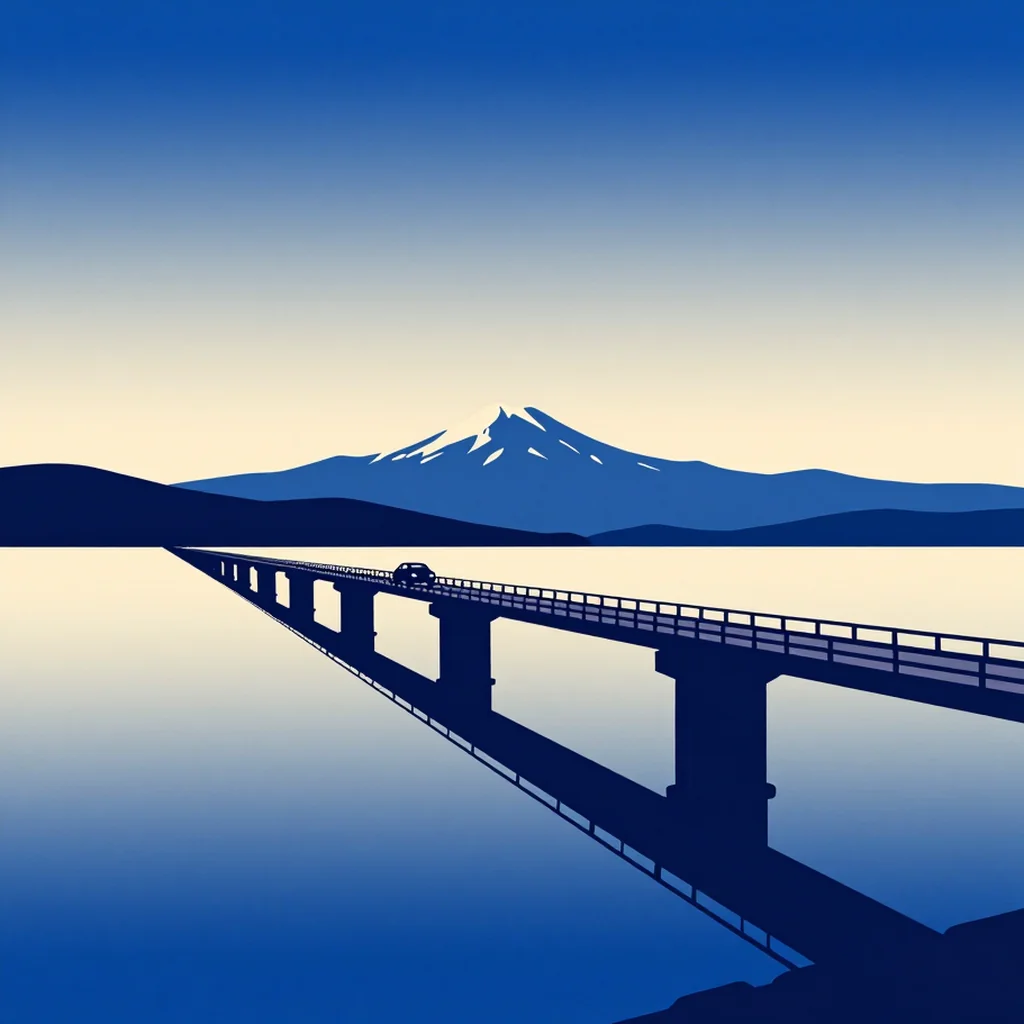
The SR 520 Evergreen Point Floating Bridge, opened April 2016, has a 7,710-foot floating span certified by Guinness World Records as the longest floating bridge in the world.
Source: historylink.org
sightRainier over the lake
The SR 520 Trail across the Lake Washington floating bridge has 11 viewpoints where trail users can take in views of the water, the Seattle skyline and, on a clear day, Mount Rainier.
Source: traillink.com
historyMedina's ferry landing
Medina had regular ferry service from Seattle as early as the 1890s, and the Port of Seattle introduced car ferry service to Medina and Bellevue in 1913. After Lake Washington was lowered, King County built a new car ferry dock and terminal building at Medina; when ferry service ended, the terminal became a community clubhouse and later Medina City Hall, which still stands on the site beside a beach park.
Source: eastsideheritagecenter.org
quirkHunts Point
Hunts Point is a tiny, affluent King County town on a tree-covered peninsula jutting into Lake Washington between Evergreen Point and Yarrow Point; it incorporated in 1955 and had about 425 residents in 2015.
Source: historylink.org
historyMeydenbauer Bay whaling fleet
From 1919 to 1942, the American Pacific Whaling Co.'s fleet was berthed in Meydenbauer Bay for 7 months of each year to be repaired for the next season, returning each September from Alaska waters; founder William Schupp liked the freshwater port because it took care of the barnacles on the ships' hulls.
Source: archive.seattletimes.com
sightYarrow Bay wetlands
The Yarrow Bay Wetlands in Kirkland are a 73-acre natural park with trails offering close-up views of wetland habitat and wildlife.
Source: kirklandwa.gov
sightBellevue Downtown Park
Bellevue Downtown Park is a 21-acre park where a half-mile promenade, bordered by a double row of shade trees, and a stepped canal lead to a 240-foot-wide waterfall that cascades into a reflecting pond.
Source: bellevuewa.gov
historyOld Bellevue strawberry fields
In the 1920s and 1930s Bellevue was famous for strawberries, largely grown by Japanese American farm families; the first Bellevue Strawberry Festival, held behind the Main Street school in June 1925, drew 3,000 visitors, and the 1935 festival drew over 15,000. The festivals ended in 1942 when 55 local Japanese families were forced into internment camps.
Source: historylink.org
historyBellevue Square
In 1946, developer Kemper Freeman Sr. (1910-1982) opened Bellevue Square, the first shopping center on the Eastside, in downtown Bellevue, where strawberry farms had been just a few years earlier.
Source: historylink.org
quirkThe name Bellevue
In the 1880s the village on Meydenbauer Bay was named Bellevue, French for 'beautiful view', either for the view from the new post office's window or after a city of the same name in Indiana where prominent settlers came from.
Source: bellevuewa.gov
seasonalSnowflake Lane
Snowflake Lane is a free nightly parade of holiday floats with falling snow, lights, music, toy drummers and dancers, running between Bellevue Square and Lincoln Square from NE 4th to NE 8th Streets along Bellevue Way every night at 7 pm in the weeks before Christmas.
Source: bellevuecollection.com
quirkBurgermaster
From 1981 to 1986 Microsoft's headquarters, the Northup Building in Bellevue, sat next door to the Burgermaster drive-in. In Windows 3.0 the data segment that tracked all the other data segments was named the BurgerMaster; according to one story the developer named it after seeing the restaurant's sign from his window. Bill Gates's secretary kept Burgermaster on speed dial.
Source: devblogs.microsoft.com
developmentBellevue 600 tower
Bellevue 600 is a 43-story, 600-foot Amazon office tower beside the downtown transit center; it topped out in September 2024, joining 555 Tower as Bellevue's tallest.
Source: en.wikipedia.org
development2 Line light rail
Sound Transit's 2 Line started service on April 27, 2024, an 8-station Eastside starter line running between South Bellevue and Redmond Technology Station; Sound Transit estimated 35,000 boardings on opening day, when crush loads of passengers poured in for their first ride.
Source: theurbanist.org
sightWilburton Trestle
King County is turning the 1,000-foot Wilburton Trestle, the longest wooden trestle in the Pacific Northwest, into a trail bridge on the 42-mile Eastrail.
Source: eastrail.org
developmentSpring District
The 36-acre Spring District rose on the site of a former Safeway distribution center in the Bel-Red area: a 16-block transit-oriented development of housing, offices and retail centered on its own light rail station, where REI planned a headquarters campus and in 2020 sold it unfinished to Facebook, now Meta.
Source: en.wikipedia.org
institutionBellevue Botanical Garden
Bellevue Botanical Garden, established in 1992, has grown from a 7-acre gift to the city into a 53-acre public park; it has kept admission free, with its Society run on an all-volunteer basis and many organizations helping maintain the gardens.
Source: en.wikipedia.org
seasonalGarden d'Lights
Garden d'Lights, now in its 31st year at Bellevue Botanical Garden, shapes over half a million lights into plants, flowers, birds and animals.
Source: bellevuebotanical.org
institutionKelsey Creek Farm
Kelsey Creek Farm, owned and run by the City of Bellevue, is home to ponies, goats, sheep, cows, pigs, chickens, ducks and rabbits, and holds a sheep-shearing day each April.
Source: bellevuewa.gov
institutionNintendo of America
Nintendo of America moved from Seattle to Redmond after launching Donkey Kong, opening its new building there by December 1982; the Redmond campus remains its home, with its current headquarters at 4600 150th Avenue.
Source: acriticalhit.com
seasonalLarsen Lake Blueberry Farm
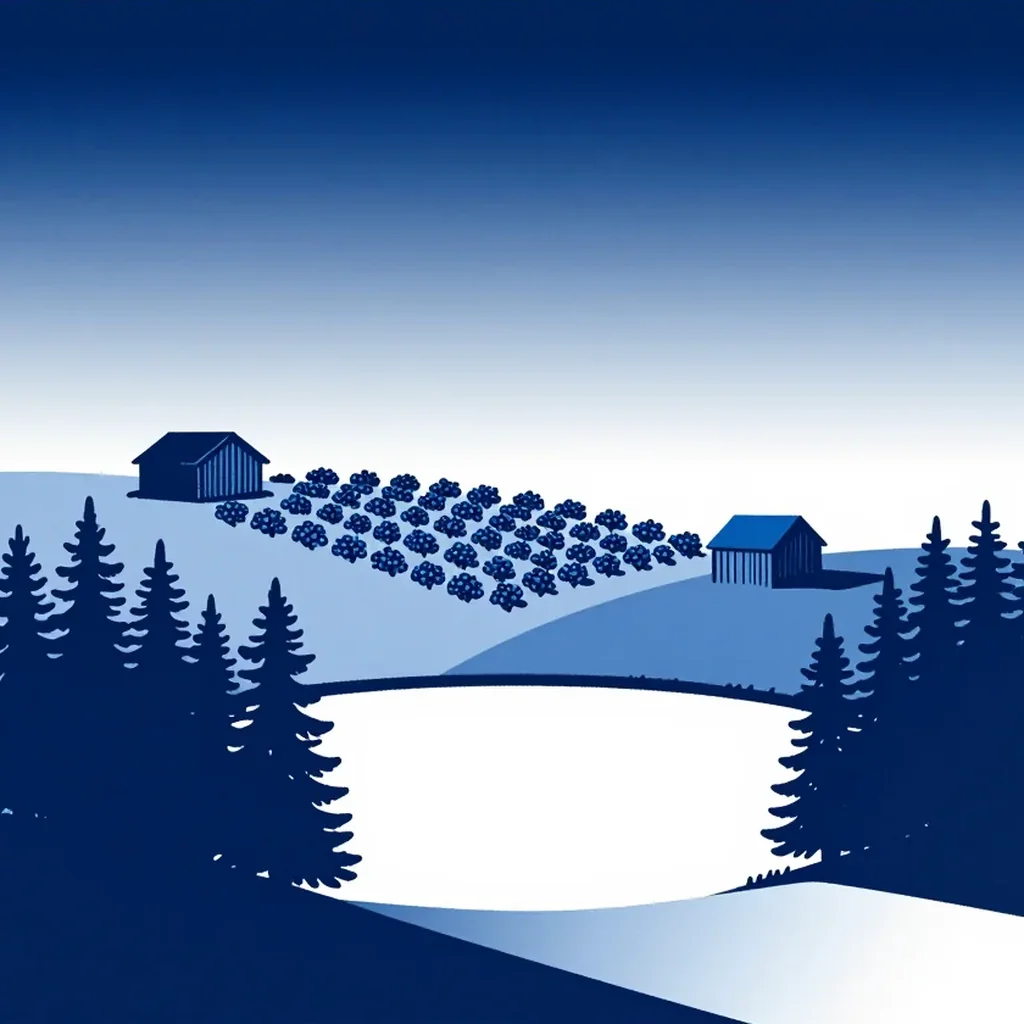
Larsen Lake is named for Danish immigrants Ove Peter and Mary Larsen, who acquired 160 acres near it in 1889; Louis Weinzirl planted the land with blueberries in 1944, and the City of Bellevue bought the farm in 1970 and leases it to farmers.
Source: bellevuereporter.com
developmentMicrosoft campus rebuild
Microsoft's Redmond Campus Refresh replaces 12 older buildings with 17 new ones totaling about 3 million square feet, plus a pedestrian and bike bridge over SR 520 connecting to the Redmond Technology Center light rail station.
Source: redmond.gov
historyRedmond Derby Days
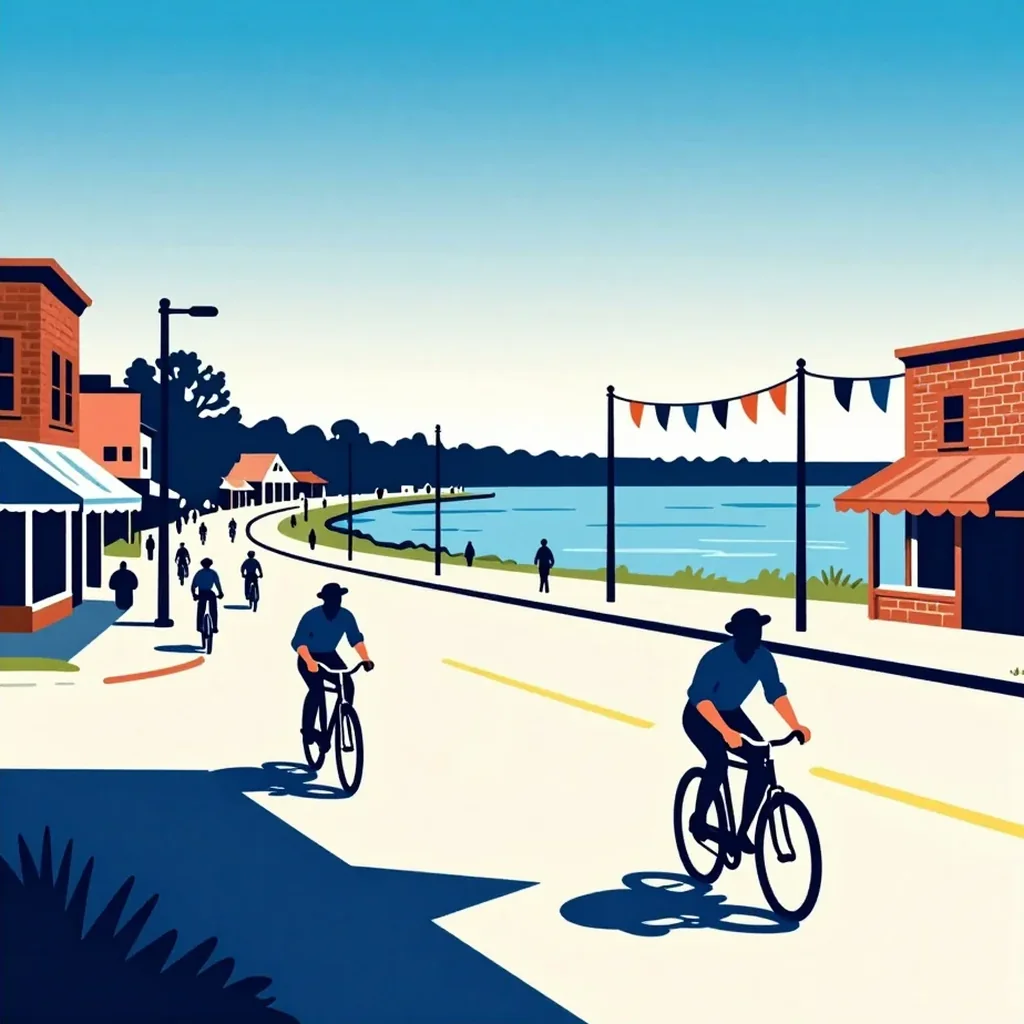
Redmond Derby Days began in July 1939 as a 25-mile bicycle race around Lake Sammamish, started by downtown business people raising money for sidewalk flags.
Source: historylink.org
institutionCrossroads Bellevue
Crossroads Bellevue has the nickname of being the living room of the Eastside, and prides itself as the living room of the Eastside's immigrant community, with an ethnic food court, concerts and community gatherings; by 2013 its oversize chess set had drawn players and spectators for over 20 years.
Source: seattleglobalist.com
institutionDick's Drive-In at Crossroads
Dick's Drive-In, founded in Seattle in 1954, opened its Crossroads Bellevue location in December 2021, the chain's first Eastside store in five decades.
Source: seattletimes.com
seasonalBellevue Strawberry Festival
The Eastside Heritage Center's annual Bellevue Strawberry Festival at Crossroads Park celebrates Bellevue's agricultural history. The original strawberry festival started in 1925 but was cancelled in 1942, when Japanese farmers forced into internment camps during World War II didn't return to the Eastside.
Source: bellevuereporter.com
historyMicrosoft campus
Microsoft moved from Bellevue to its new Redmond campus on February 26, 1986, weeks before its March 13 IPO; the original 30-acre campus had six buildings and room for about 800 employees.
Source: en.wikipedia.org
sightMarymoor windmill
The windmill at Marymoor Park was built on James Clise's Willowmoor estate, begun in 1904 and modeled after Dutch windmills; the estate became King County's first park in 1962.
Source: historylink.org
seasonalMarymoor Live
Marymoor Live is King County's annual summer concert series at Marymoor Park, held at a 6,500-person concert venue in the Willowmoor Farm historical district near Clise Mansion.
Source: kingcounty.gov
historyClise Mansion at Marymoor
Seattle businessman James Clise bought land here in 1904 and built the Willowmoor hunting lodge, which grew into a 28-room mansion and a model farm of nearly 400 acres; King County bought the property in 1962 as its first county park.
Source: historylink.org
developmentDowntown Redmond light rail
The Downtown Redmond Link extension opened May 10, 2025, adding Marymoor Village and Downtown Redmond stations to Sound Transit's 2 Line, with light rail between downtown Redmond and South Bellevue.
Source: soundtransit.org
quirkMarymoor off-leash dog area
Marymoor Park is best known for its 40-acre off-leash dog area, locally dubbed Doggy Disneyland, where dogs paddle after tennis balls thrown into the Sammamish Slough.
Source: kingcounty.gov
quirkJerry Baker Memorial Velodrome
The Jerry Baker Memorial Velodrome, a 400-meter cycling track opened in Marymoor Park in 1975, is Washington state's only velodrome and hosts a popular Friday night racing series.
Source: kingcounty.gov
sightMarymoor Park
Marymoor Park is King County's largest and oldest park at 640 acres, home to a velodrome and to banker James Clise's early-1900s Willowmoor farm and Clise Mansion.
Source: en.wikipedia.org
sightLake Sammamish
Lake Sammamish is a freshwater lake 7 miles long and 1.5 miles wide, stretching from Issaquah in the south to Redmond in the north, with public access to its west shore at Redmond's Idylwood Park.
Source: en.wikipedia.org
Landscape you can see from the road
| Feature | Type |
|---|---|
| Bear Creek | Stream |
| Clise Creek | Stream |
| Cozy Cove | Bay |
| Denny Hill (historical) | Summit |
| Fairweather Bay | Bay |
| Foster Island | Island |
| Goff Creek | Stream |
| Harrison Ridge | Ridge |
| Idylwood Creek | Stream |
| Kelsey Creek | Stream |
| Lake Sturtevant | Lake |
| Lake Union | Lake |
Stops along this corridor
| Kind | Count |
|---|---|
| restaurant | 2689 |
| coffee | 822 |
| bar | 592 |
| park | 482 |
| fast food | 472 |
| grocery | 388 |
| museum | 42 |
| memorial | 18 |
| attraction | 8 |
| viewpoint | 5 |
| peak | 3 |
| monument | 2 |
Where to eat along this corridor
Town by town, what is actually within a short detour of the highway.
Coverage
withby narrates 6 map cells on this corridor today.
Sal reads these as you pass them, and answers when you ask.
Start a withby drive